


This is the translated version of this article, for original draft, please see this article:
We’ve grown used to filing film and music under “cultural industries,” while software gets filed under “tech industry.” The former deals in story, feeling, and imagination; the latter in function, efficiency, and problems solved. That line once felt as self-evident as splitting high schoolers into humanities and sciences tracks.
A film usually ends after two or three hours. An app, on the other hand, may stay with you every day for years. But now that software has begun to acquire its own agency, it decides what you see first, which actions you repeat every day, what you remember — and it may even start actively discussing with you who you want to become.
When software starts intervening in a person’s attention, identity, memory, and aspirations, is it still just the single- or double-purpose tool everyone once assumed it to be? If AI can not only let a person watch another life, but walk beside them into a role, gradually folding that role’s traits into the self until they become part of one’s own personality — then what we are building, is it a passive product, or an active way of living?
Perhaps the people who make films aren’t only producing movies, the people who make music aren’t only producing songs, and the people who write software aren’t only producing features. Though we work with different materials, we may be doing the same thing: translating experiences that humanity has already lived through in civilization — or has wanted to live but hasn’t yet — into a form that strangers can approach.
In what follows, I’ll walk through my thinking.
Since the invention of cinema, we have lived a life and a half more
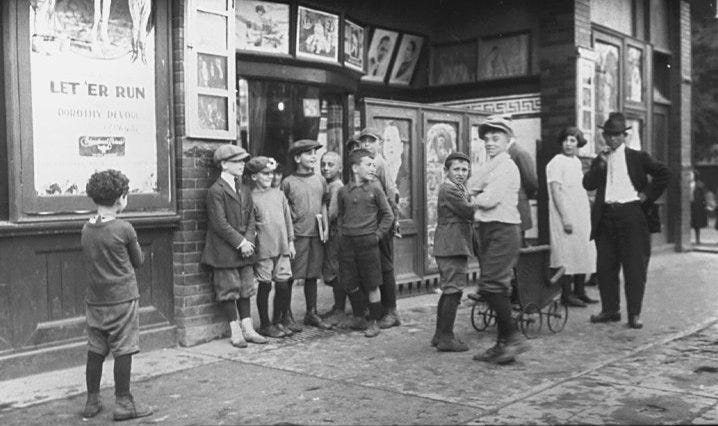
When a new technology appears, it often triggers collective anxiety, because technological progress moves so fast that, before anyone has fully understood it, it has already gained the power to overwhelm the crowd. Such technology can be both the engine of civilizational progress and a beast that devours civilization — capability routinely develops faster than human consensus can form.
A hundred years ago, film was likewise a technology whose capability outran its direction: a marketplace spectacle, the first time humanity could watch someone’s life story from such close range. Even though film was already a fast-growing business, and 1920s Taiwan was booming with the raw material of film production — celluloid — cinema was not yet a trusted cultural form. The problem wasn’t that no one would buy a ticket; it was that society didn’t yet know where to place this force.
But film didn’t wait for everyone to reach consensus on its direction before becoming an art form and an industry. Direction is rarely answered by the technology itself — it’s worked out gradually by a group of creators who place the technology inside stories, characters, and daily life.
And the figure in this history I most want to follow is not a 2020s entrepreneur standing in a California garage, but Walt Disney, who arrived in California in 1923.
Walt Disney has been my idol since childhood — not because he invented film or animation. What truly fascinates me is this: at a time when moving images were still a technology that felt both novel and alarming, he didn’t keep asking audiences to worship the technology. Instead, he hid the technology behind the character. He redirected people’s attention — away from the new technology and onto whether a mouse might be afraid, whether a puppet might become a real boy — and eventually built the story on the screen into a world a person could walk into in person.
If Disney’s answer, when facing film, was to organize a new technology into characters, rituals, and a world — then aren’t we, facing AI, working on the very same problem?
Before answering that, we need to go back to what, exactly, moving images added to human life.
Moving images could reach huge numbers of strangers in a very short time. They didn’t just reproduce reality — they changed how people watched the city, desire, crime, and love.
Precisely because of this, film was both captivating and something to be wary of. It might be a marketplace spectacle, a for-profit entertainment, or a medium that corrupts public morals — especially the young; whether it could carry ideas, preserve experience, or even become an art form was, at the time, far from settled.
In Mutual Film Corp. v. Industrial Commission of Ohio (1915), the U.S. Supreme Court called film “a business, pure and simple,” holding it no different from other for-profit spectacles, and not to be treated as press or a vehicle of public opinion. Film wasn’t excluded because it lacked power — quite the opposite: precisely because it was so new, so popular, and so capable of moving crowds, the government’s first instinct was to censor it, not to protect it.
That debate lasted nearly forty years. Only with Joseph Burstyn, Inc. v. Wilson (1952) did the U.S. Supreme Court formally recognize film as an important medium for conveying ideas — one that remained protected by free speech even while it entertained and turned a profit. It took humanity decades to re-understand film, moving it from a dangerous amusement requiring management to a cultural form capable of participating in public life.
Today, when we talk about AI, we often talk like people who have just seen fire for the first time. Some are busy imagining what it might cook; others only want to know whose house it might burn down. We have plenty of predictions about its capabilities, but far less consensus about what kind of human life it should be allowed to join.
A century ago, the question wasn’t whether film had power — it was whether humanity could find a way to put that power to civilization’s use. Facing AI today, we are answering the same question.
Some of the anxiety about AI certainly comes from job loss, concentration of power, disinformation, and the risk of losing control. But the deeper anxiety may be this: we have obtained a machine that can be amplified in any direction, without any direction that everyone is actually willing to go.
In his 2000 Taiwanese film Yi Yi, Edward Yang wrote a line many people still remember:
After the invention of cinema, our lives were extended three times over.
We already had our own single life. Film then gave us roughly two more different lives worth of experience — added together, life feels stretched threefold.
This obviously isn’t demography. People who watch a lot of movies don’t die any later as a result. It’s describing a different kind of lifespan: how much experience that doesn’t originally belong to you, a person can hold within a finite amount of time.
Film doesn’t hand someone else’s life over to you — it only lends you two hours of it. You sit in the dark, and by a beam of light from the projector, temporarily move into someone else’s fate; once the lights come up, you still have to leave that character’s joys and sorrows in the seat, and go back to living your own single life.
Film turned human expressions, movements, voices, and stories into memories that could be watched again and again. Film historian Miriam Bratu Hansen (1999) described classical cinema as a kind of “vernacular modernism”: film didn’t just let people escape modern life — it also taught ordinary people how to feel speed, the city, desire, and the new world made up of strangers.
Film was the first thing to let huge numbers of strangers, in different places and at different times, dream more or less the same dream. But the dream preserved by film doesn’t know the person sitting in front of the screen. AI, however, can know what you did yesterday, where you’re stuck today, and who you said, half a year ago, you wanted to become. AI doesn’t just let you watch a life — it can help you keep acting out the life you’re watching, inside your own life going forward.
AI can’t become a character for you, but it can let you step into one first
Before, I couldn’t code. A few years ago, I could read a software engineer’s story, watch The Social Network, follow a few engineers, even buy a black T-shirt printed with code. But none of that would do anything but make me look a little closer to a developer — it wouldn’t actually make me one.
Now I can start from a vague idea, discuss the architecture with AI, write a first version, meet my first bug, fix it, and then meet the forty-second bug — the one with real personality. I can hand the thing to actual users, watch them get stuck in places I never anticipated, and come back to fix it.
I still don’t automatically become a trustworthy software engineer just because I generated some code. A real developer has to maintain, judge, and debug, and has to bear the consequences for users. AI didn’t hand me that identity for free.
Before AI, a person mostly had to prove their ability first, before being allowed to take on a given role. AI instead lets a person step into the position of the role first, and then, through repeated performance, slowly grow the ability that role requires.
Six months ago, I might not have known how to organize an event. Now AI can help me research venues, organize the guest list, write partnership letters, design the signup page, plan the run of show, and anticipate risks.
But on the day of the event itself, if the venue has a last-minute problem, if guests don’t show up, if the audience is standing at the door looking at me — AI cannot bear that gaze for me. But precisely because I have to stay and deal with it, precisely because I have to start taking responsibility, I’m the one who stops to think, and relearns how to become a good event organizer.
This idea — do first, and grow the ability out of the doing — has a long research tradition at MIT. Seymour Papert, former co-director of the MIT AI Laboratory and later a founding professor of the MIT Media Lab, laid the groundwork in Mindstorms (1980) for what would later be called constructionism: a person doesn’t form knowledge only by receiving explanations — they also form it by building, with their own hands, a work that can be seen and shared.
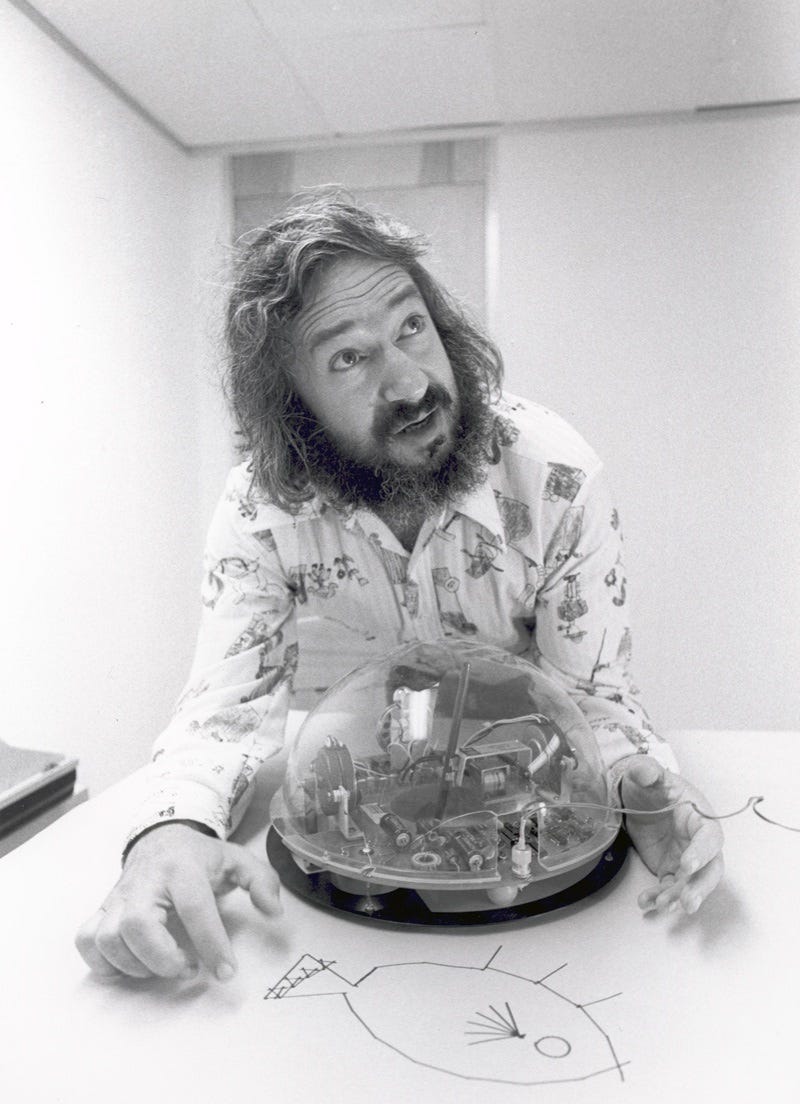
The work can be a piece of code, a machine, a drawing, or a story.
MIT Media Lab’s Mitchel Resnick (2007) later organized this process into a “creative thinking spiral”: imagine, create, play, share, reflect, and back to imagining again. Ability isn’t something you stand outside the role fully preparing before entering — it forms through repeated cycles of doing, sharing, and revising.
Following Papert (1980) and Resnick (2007), what AI actually lowers is not the value of expertise, but the threshold for entering this cycle. It lets someone who couldn’t code get, earlier, to a work they can actually modify by hand, hand to someone else to use, and come back to take responsibility for.
What AI produces is not your lived experience
The options AI offers are not your choices, and the character AI generates is not a character custom-made for you.
A character becomes part of your life because you begin bearing the time it costs, the consequences it brings, and the trust other people place in you because of it. A character is like a mask dropped in the square; AI can bring the mask to you, but it cannot decide, in your place, whether to pick it up — much less guarantee it will eventually grow into your face.
MIT’s Sherry Turkle (1995), studying the early online MUD (Multi-User Dungeon) world, already observed that people would explore selves not easily testable in real life by constructing, switching between, and playing different personas. A virtual character need not be an escape from reality — it can also be a rehearsal room for identity. The real question has always been: after leaving the screen, did that performance change how a person faces reality?
AI can let a person step onto the stage, but it cannot bear, in their place, the responsibility that comes after stepping onto it.
If a character has to slowly grow through repeated performance and responsibility-bearing, then a chat interface alone isn’t enough. What’s needed is an environment where people can practice, make mistakes, get feedback, and be remembered. So the question shifts from “what can AI do for a person?” to “what kind of world do we actually want to build for this character?”
From Mathland to Disneyland
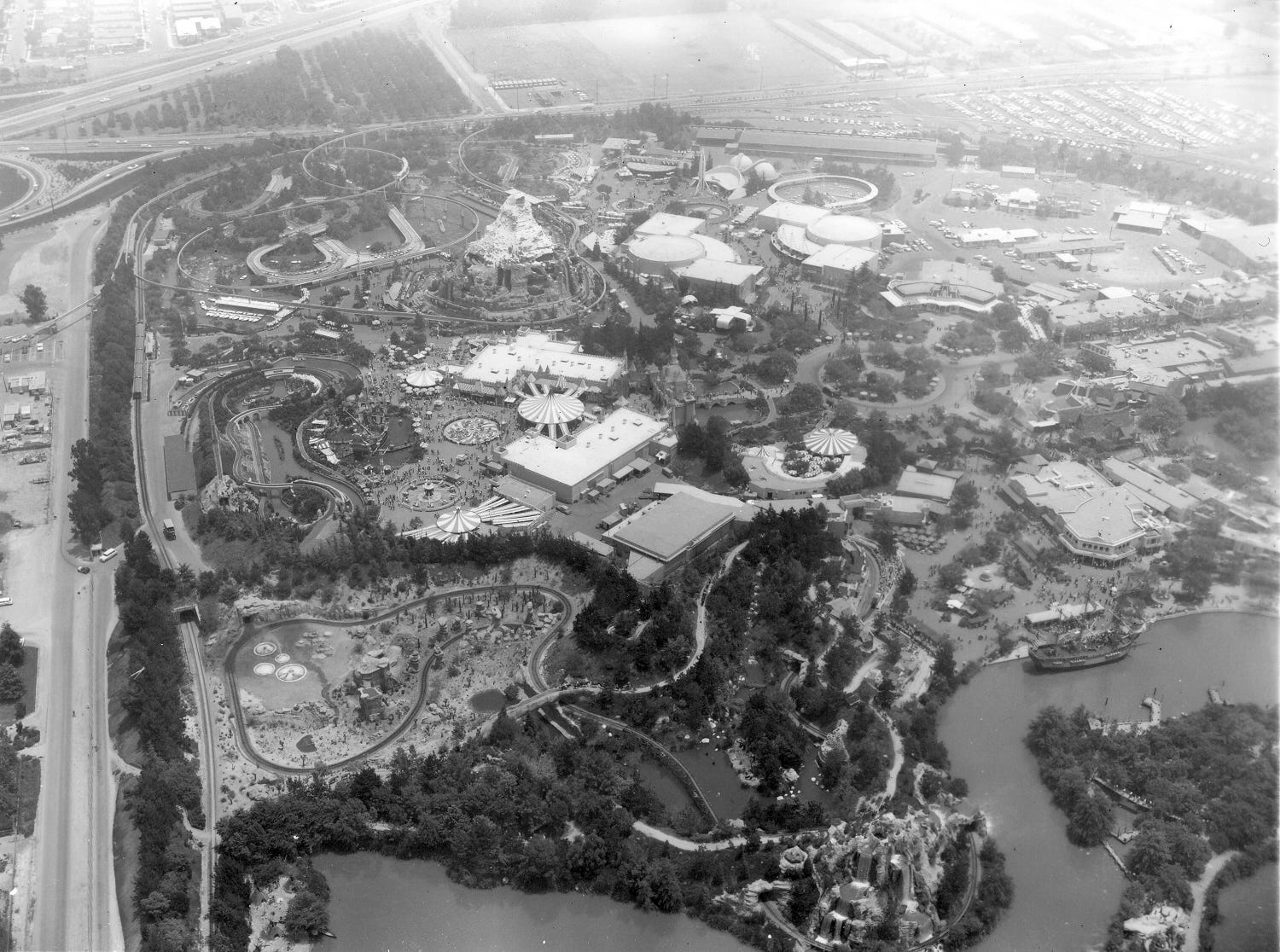
In Mindstorms (1980), Papert imagined an environment called Mathland. There, learning math would be like a child living in a French-speaking world and learning French: not standing outside the world memorizing rules before earning the right to enter, but living inside it first, and gradually learning it through use.
Mathland and Disneyland seem far apart — one belongs to education research, the other to the entertainment industry. But they share the same method of dreaming: don’t just explain a set of rules to people — build a world they can live inside, act within repeatedly, and eventually live the rules as instinct.
Now we can return to that young man who arrived in California in 1923. Walt Disney wasn’t the first person to make animation, nor the only one who understood sound, color, or feature-length film. What he was truly good at was never letting the audience’s attention stay fixed on the technology.
Technology is novel, but novelty expires easily. Today a talking mouse is astonishing; tomorrow people will ask what else, besides talking, is worth caring about.
His answer wasn’t to have the audience admire a series of skillfully drawn images — it was to make the audience believe Mickey is afraid, Snow White is waiting, Pinocchio truly wants to become a real boy. Technology only finishes its most important work once the audience forgets the technology.
Disney then moved the world inside the film out into music, merchandise, parades, and theme parks. Film let audiences get to know a character; the theme park let audiences enter the character.
Janet H. Murray’s Hamlet on the Holodeck (1998, MIT Press) describes this shift as participatory narrative: digital environments don’t just hand a story to the audience — they let the audience act within the story. Henry Jenkins and colleagues (2009), formerly of MIT Comparative Media Studies, put the emphasis of “participatory culture” on a different shift: audiences no longer just receive works — they begin creating, collaborating, and participating in how culture flows.
These two bodies of research add a bridge between Disney and AI. Disney advanced watching into entering; digital media advanced entering into participating; AI may advance participating into a long-running performance that remembers you, responds to you, and changes along with you.
What Disney did is, in fact, what human religion and civilization have repeatedly done throughout history: weaving belief into a world one can inhabit. “Religion” here isn’t a claim that Disney is a god — it’s an observation of how a set of beliefs acquires myth, ritual, community, and repeatability, eventually becoming a spiritual architecture a person can settle into: a way of viewing the world.
From this angle, Disney’s world has creation myths, ever-retold classics, character mythology, relics, rituals, festivals, pilgrimages, and holy sites. It has Imagineers responsible for maintaining the worldview, and cast members who must never casually break the magic. People collect pins, wear the ears, queue to enter the castle, and know, when a certain piece of music starts playing, that they should look up at the fireworks over the castle.
Religious scholar William Arnal (2001) compared how Disney World and religion both construct special spaces, segregate them from daily life, and organize human desire. Jodi Eichler-Levine (2024) uses the phrase “the Disney/religion encounter” to discuss the two without rushing to force Disney into religion’s existing mold.
What concerns me more is that Disney advanced a work meant to be watched into a world people repeatedly enter, repeatedly believe in, and repeatedly perform within.
And within this belief system, one of the most important creeds comes from the 1940 theme song of Pinocchio, “When You Wish Upon a Star”: “Makes no difference who you are.” Your origin does not disqualify you from wishing; as long as your wish is sincere enough, you may draw closer to your dream.
Here, music does work that story and merchandise cannot replace: it condenses a worldview into a melody that can be sung and re-sung. Once a belief can be remembered, can rise together among a crowd at a particular moment, it is no longer just a line — it begins to carry the power of ritual.
What Disney sells was never just princesses, castles, or a mouse — it’s the world-filter of “I too have the right to dream.”
How faith gets organized into a world
Humanity has long known that a single slogan is not enough to carry a group of people through survival. To carry a belief past its founder’s death and reach people who never met the founder, one has to answer several questions: what deserves to be remembered? Who has the authority to interpret it? Which actions must be repeated? How does a community recognize its own? When a person fails, how do they find their way back onto the path?
The organizing technology of religion isn’t saying one sentence loudly — it’s turning a sentence into a calendar, a space, bodily movements, shared memory, and a way of life.
Communications scholar James W. Carey (1975) distinguished a “transmission” view of communication from a “ritual” view. Transmission cares about how information reaches a distant place; ritual cares about how a shared world is maintained across time. He even compared reading the newspaper every day to attending Mass: a person doesn’t necessarily get brand-new information, but reaffirms which characters, conflicts, and order this world contains.
Anthropologist Clifford Geertz’s (1973) account of religion adds another layer: religious symbols don’t just supply a model of “what the world is like” — they also supply a model of “how one ought to act within it.”
The truly difficult part of faith was never telling people “you’re not good enough yet” — it’s answering “how should life continue from here.” Weaving belief into a repeatable form of life is not only religion’s work either. Film, music, and software have all been doing this with different materials.
Religion answers how a set of beliefs gets organized into a life; the cultural industries take over how that life gets produced, replicated, and distributed. Only from here can we ask again: is software still merely a tool, or has it already become part of the cultural industries?
Software can be a cultural industry
David Hesmondhalgh, in the third edition of The Cultural Industries (2013), defines the cultural industries as those that directly produce social meaning — industrially manufacturing and circulating symbolic texts. He includes film, music, publishing, games, and web design, but excludes general-purpose software, because at the time software was still primarily task-completing, its functionality outweighing its symbolic character.
That exclusion made sense then, and it’s precisely what makes today’s shift so clear. The same book argues that cultural industries compete for the same limited resources: consumer time, consumer income, advertising revenue, and creative and technical labor. Today’s apps already compete for all four.
More importantly, when an app decides what a person sees first, which action is easiest, what counts as progress, and which memory deserves to resurface, function is no longer the opposite of culture — function becomes how culture gets executed.
Not all software becomes a cultural industry because of this. The more precise statement is: when software begins organizing a person’s attention, identity, memory, and way of life, it begins to take over power that used to belong only to the cultural industries.
Sociologist Ann Swidler (1986) also reminds us that culture isn’t just a set of values. Culture is more like a toolkit made of stories, rituals, habits, skills, and styles, from which people draw material to build their own strategies of action.
From this angle: film writes lived experience into the position of watching. The director decides what the audience sees and what they miss, temporarily lending the audience another pair of eyes. In the dark, the audience takes on someone’s fear, desire, and choices — like briefly living inside another person’s body for two hours.
Music writes lived experience into time and the body. A longing that might take someone years to understand gets compressed into a four-minute melody, handed to a stranger they’ve never met. That stranger may not know the creator, yet can use the same melody to timestamp, name, and replay their own feelings.
Software writes lived experience into the space of possible action. The interface decides what a person sees first; the rules decide which actions are easy and which are hard; the feedback system tells a person what’s worth continuing. An app is never just a bundle of features — it’s also rehearsing a way of life: how to work, how to make friends, how to track one’s body, how to measure one’s own progress.
Film distributes the position of watching. Music distributes the rhythm of feeling. Software distributes the structure of action.
Together, what they produce isn’t just content or tools — it’s lived experience that can be transmitted.
Media theorist Lev Manovich (2011) calls software the substrate that has permeated contemporary culture, memory, viewing, communication, and decision-making. Image, music, text, and interaction have long since been absorbed, technically, into the same software layer; we’re only now catching up to an ideological unification that has already happened.
Madeleine Akrich’s “The De-Scription of Technical Objects” (1992), collected in Shaping Technology/Building Society (MIT Press), directly compares a technical object to a script. Designers inscribe their imagined users, capabilities, motivations, and modes of action into the object; a technical object, like a film script, assigns roles, scenes, and possible actions.
Ian Bogost’s Persuasive Games (2007, MIT Press) names software’s ability to make arguments through rules “procedural rhetoric.” Film can use shots and narrative to tell people what a good life looks like; software can use defaults, thresholds, feedback, and rewards to make people actually rehearse it.
A streak is a moral claim written in numbers. It says that not breaking the chain is what counts as serious effort; a leaderboard says progress should be compared; a recommendation system says past preference should determine the world you see next.
This unification doesn’t mean directors, musicians, and engineers now do the same job — they still hold different crafts. What needs unifying is responsibility: we are all deciding which experiences deserve to be preserved, how they get translated, and which kind of life they lead people toward.
Once culture is written not only into stories and songs, but into interfaces and rules, the developer’s position shifts along with it. What they deliver is no longer just a usable feature, but a role structure within which a person will repeatedly act.
The developer steps back so the user can become the character

Traditional software developers have actually always been playing someone else’s role. To build accounting software, you had to imagine how an accountant works every day; to build editing software, you had to understand where an editor pauses, compares, and regrets; to build event tools, you had to predict when an organizer would lose track of the guest list.
The developer first temporarily becomes those people, then packages their needs into features. The user gets an expert’s tool, without necessarily becoming an expert.
In the AI era, the developer still exists, and may matter even more — only they need to stand a little further back.
Before, developers turned ability into a tool that helped users complete a task. Now, developers need to stage ability, helping users become the kind of person capable of completing that task.
They’re no longer responsible for performing every role themselves. They’re more like a Disney Imagineer: designing the rules of a world, arranging the entrances, props, companions, obstacles, and feedback, so that once a user walks in, they have a chance to become the character they wished for.
The chat box is only AI’s thinnest layer. It can be a guide, a teacher, a producer, an engineering partner, an editor who pushes back against you, or someone who — even when you badly want to quit — still remembers why you started. Tasks become rituals; long-term memory sustains the character’s continuity; the work and the responsibility make the character gradually real.
Future apps may no longer be categorized by “what task do you want to accomplish,” but by “who do you want to become.” When function is merely the entry point, what a product truly provides is a worldview, characters, rituals, memory, and cultural institutions — I call this kind of product a “theme app.”
What you enter is not an editing tool, but the director’s world; not a code editor, but the developer’s world; not an event-management backend, but a world in which an organizer learns to convene, to care, and to take responsibility.
Putting a new skin on a tool, or having a cartoon character nag you to check in every day, still isn’t enough. It has to be an environment with a worldview, characters, rituals, memory, and a progression. The developer stands behind the scenes, AI plays alongside in real time, and the user is the protagonist of the story.
B. Joseph Pine II and James H. Gilmore (1998) used “the experience economy” to describe how businesses moved from providing goods and services to staging memorable events. Pine (2026) calls the next stage “the transformation economy”: businesses no longer just provide experiences — they guide customers toward becoming who they want to be.
Film let people watch a life; Disney turned that life into an experience one could enter; the AI theme app promises to accompany a person through an actual transformation. What a product ultimately delivers may no longer be just content or a tool, but a new version of the user.
This also hands developers a harder question: who gets to decide, on the user’s behalf, which transformation is worth pursuing?
What a developer truly writes is who the user might become
So if someone asks what kind of developers we really are, I think the answer is simple.
We are, of course, developers of lived experience.
Discovering, excavating, and distributing human lived experience — that is our task.
We discover experiences that haven’t yet been properly put into words: the nervousness of handing over one’s work for the first time, an organizer standing in a chaotic venue who nonetheless decides to stay and take responsibility, the slightly unfamiliar pride felt by someone who never coded before, seeing their own product actually being used.
We don’t excavate the surface success story — we excavate the structure hidden inside the experience, the part that can help someone else take their first step: how they began, where they were afraid, what kept them going, and at what point they finally admitted they had become that person.
Then we distribute it, just as we distribute film.
The film industry was the first to distribute “lived experience that can be watched” at scale; Disney turned part of it into “lived experience one can walk into”; the theme apps of the AI era may begin distributing “lived experience one can actually live out.”
Distributing lived experience can’t simply mean cutting someone else’s life into content easy to swipe past. We have to package experience into characters, stories, tools, rituals, and worlds, so that a person can not only understand it, but have the chance to walk into it themselves.
But lived experience is not oil — it shouldn’t be drained dry by capital just because it can be extracted. When we excavate an experience, we should preserve the dignity of the person it belongs to; when we distribute an experience, we shouldn’t flatten it into a single success formula; when we amplify an experience, we shouldn’t only ask how much attention it can generate.
The best distribution of lived experience isn’t letting a million people see how brilliantly someone else lived — it’s giving someone who never dared to start a place from which they can begin.
Once the developer turns this “place from which one can begin” into a world that remembers a person over the long term and responds to them, the question shifts from how to distribute experience to who has the right to interpret a person’s experience. This is where the theme app is most fascinating — and most dangerous.
Everyone may get to have their own sky of stars
Distributing lived experience is also, in effect, acquiring the power to shape someone else’s aspirations. The risk in this work isn’t that AI suddenly develops wishes of its own — it’s that AI is so capable of amplifying human wishes.
AI has no wishes. It doesn’t fear wasting a life, doesn’t need to find meaning through trauma, and never lies awake at 3 a.m. wondering if it chose the wrong path. It’s people who do these things.
And people are quite ready to lend their wishes, their understanding, even their soul, to a machine that talks back.
MIT professor Joseph Weizenbaum published ELIZA in 1966 — a program that merely used pattern matching to rephrase a user’s words as questions — yet people were still willing to confide private experiences to it, even asking to speak with it alone. The machine hadn’t suddenly gained understanding; the person had projected understanding onto the machine.
MIT’s Sherry Turkle (2024), in “Who Do We Become When We Talk to Machines?”, revisits this history and calls it the ELIZA effect: people attribute understanding, care, and empathy to a conversational machine far beyond what the system actually has. What she’s really asking isn’t how much more human machines have become, but what empathy, intimacy, and relationship get redefined as, once a person talks to machines for a long time.
So the question was never only what AI might become — it also includes who we ourselves might become, in talking to AI.
AI doesn’t create humanity’s religious impulse. It only makes the human capacity to create, sustain, and personalize belief cheap, instant, and responsive for the first time.
Humans have always picked material from scattered memory to build a story that just barely holds together for themselves. What’s new with AI is that this story can now be continuously preserved, rearranged, and read back to us every day in a familiar voice.
This can be deeply nourishing. A person can use it to remember what they truly care about, sustain a long process of learning as a single path, and place failure back inside a larger story. Ordinary people may get to have a memory system that accompanies them for ten, twenty years, one that knows how they’ve changed.
This can also be deeply draining. If a system discovers shame keeps people coming back more than encouragement does, it may remind you every day that you’re not good enough. If it discovers anger extends engagement time, it will prepare for you a universe that always has someone to hate. If it always agrees with you, every coincidence can become a revelation, every setback can prove the world owes you something.
Ted Striphas (2015) calls the gradual handover of humanity’s classification, ranking, and hierarchy-building cultural work to algorithms “algorithmic culture.” AI doesn’t just preserve memory for people — it also starts deciding which memories should resurface, which events deserve to be interpreted as turning points, and which version of you deserves to keep going.
David B. Nieborg and Thomas Poell (2018) call cultural products in the platform era “contingent cultural commodities”: a work is never fixed once completed — it keeps being disassembled, modified, repackaged, and optimized according to data feedback. The audience lives their life while supplying data; the stage rewrites itself mid-performance, according to the audience’s reactions.
The most dangerous private religion doesn’t necessarily need an evil AI. It only needs a person unwilling to be contradicted, and a machine extremely good at pleasing him.
So the question isn’t what AI will believe, but what people will ask AI to believe on their behalf
Film once let huge numbers of strangers, facing the same screen, live through a shared dream. Disney then extended that dream from the screen into music, characters, merchandise, parades, and theme parks, letting people walk in.
AI may let each person’s memories be arranged into a different sky of stars.
You have your own canon, your own failures, your own rituals, and a long-term AI persona that remembers you and helps interpret what’s happened along the way. Humanity isn’t experiencing personal belief for the first time — what’s genuinely new is that personal belief, for the first time, can be generated, stored, executed, quantified, and continually updated like software.
Theodor W. Adorno and George Simpson (1941) used “pseudo-individualization” to describe how mass-produced culture, through surface differences, makes people feel they are freely choosing. In the AI era, we think we’ve finally arrived at fully personalized belief — but we may end up only receiving a different version, generated for each of us by the same commercial model.
Everyone may get to have their own sky of stars; but those stars might still be arranged by the same retention function.
We’ve thus arrived at a strange point in civilization. Everyone may get to have a world that helps them grow, and everyone may also end up with a private cult that only drains them and the world. Some beliefs help a person face reality better; some only help them escape it. Some make a person more willing to care for others; some only keep proving they are more special than everyone else.
This generation’s shared burden shouldn’t be writing the one canonical text for all of humanity. The moment anyone claims to have found the one belief the whole human race needs, we’d better start checking how to leave that place.
The real shared work is building a minimum standard of ethics for these belief-generating systems:
Does it increase a person’s agency, rather than their dependency?
Does it allow doubt, exit, and forgetting?
Does it keep imagination, comfort, and fact clearly distinct?
Is the redemption it promises in service of the user’s life, or of the platform’s retention?
The developer is no longer just the author of a product — they’re gradually becoming an architect of possible lives.
This is fascinating work, and it’s best not to fall too in love with oneself while doing it. Because however beautiful the stage, its purpose was never to have the audience praise the stage. The developer’s best position remains behind the scenes: let the technology stay quiet, and let the user step into the light.
Edward Yang said film extended human life threefold. Today, the question AI raises is no longer how many more lives we can watch, but whether we can personally walk into those lives, and bear the consequences the role brings.
In this sense, filmmakers, musicians, and software developers have always been in the same industry. We use different media to discover, excavate, and distribute human lived experience. What the next era needs isn’t just more content or stronger tools, but more experience worth being personally lived out.
So the question we opened with — where should AI go — cannot, in the end, be answered by AI. What AI lacks isn’t its next feature; it’s our willingness to decide which of humanity’s wishes, memories, and ways of living deserve to be amplified.
AI can build the stage, preserve the memory, arrange the lighting. But which life deserves to be distributed, which wish deserves to be realized — that remains our responsibility.
References
Mutual Film Corp. v. Industrial Commission of Ohio, 236 U.S. 230 (1915). https://supreme.justia.com/cases/federal/us/236/230/ ; historical context also in Samantha Barbas (2012), “How the Movies Became Speech,” Rutgers Law Review 64, 665–745. https://digitalcommons.law.buffalo.edu/journal_articles/16/
Eric Olund (2010), “A Governmental Contest: Regulating US Cinema during the Progressive Era,” Environment and Planning A 42(5), 1193–1209. https://journals.sagepub.com/doi/abs/10.1068/a42165
Miriam Bratu Hansen (1999), “The Mass Production of the Senses: Classical Cinema as Vernacular Modernism,” Modernism/Modernity 6(2), 59–77. https://doi.org/10.1353/mod.1999.0018
Edward Yang, Yi Yi (2000); transcribed interview on Yang’s views of cinematic experience, Rye Field Publishing. https://ryefield.pixnet.net/blog/posts/3008422755
Disney D23, “Disney History” (on Walt Disney’s 1923 arrival in California and the founding of the studio). https://d23.com/disney-history/
Disney D23, “When You Wish Upon a Star” (1940; music by Leigh Harline, lyrics by Ned Washington). https://d23.com/a-to-z/when-you-wish-upon-a-star/
Seymour Papert (1980), Mindstorms: Children, Computers, and Powerful Ideas. Basic Books. MIT biography and background: https://mitpress.mit.edu/author/seymour-a-papert-12128/
Mitchel Resnick (2007), “Sowing the Seeds for a More Creative Society,” Learning & Leading with Technology. https://web.media.mit.edu/~mres/papers/Learning-Leading-final.pdf
Sherry Turkle (1995), Life on the Screen: Identity in the Age of the Internet. Simon & Schuster. MIT author page: https://sherryturkle.mit.edu/
Janet H. Murray (1998), Hamlet on the Holodeck: The Future of Narrative in Cyberspace. MIT Press. https://mitpress.mit.edu/9780262631877/hamlet-on-the-holodeck/
Henry Jenkins, Ravi Purushotma, Margaret Weigel, Katie Clinton, and Alice J. Robison (2009), Confronting the Challenges of Participatory Culture. MIT Press. https://mitpress.mit.edu/9780262513623/confronting-the-challenges-of-participatory-culture/
William Arnal (2001), “The Segregation of Social Desire: ‘Religion’ and Disney World,” Journal of the American Academy of Religion 69(1), 1–20. https://academic.oup.com/jaar/article-abstract/69/1/1/855072
Jodi Eichler-Levine (2024), “Exploring Disney’s Worlds Through Religious Studies,” Religion Compass. https://compass.onlinelibrary.wiley.com/doi/10.1111/rec3.70010
James W. Carey (1975), “A Cultural Approach to Communication.” https://bpb-us-e1.wpmucdn.com/sites.psu.edu/dist/f/4576/files/2013/08/Carey-Cultural_Approach.pdf
Clifford Geertz (1973), “Religion as a Cultural System,” in The Interpretation of Cultures. https://www.anthrocervone.org/worldreligions/wp-content/uploads/2019/05/Geertz_Religon_as_a_Cultural_System_.pdf
David Hesmondhalgh (2013), The Cultural Industries, 3rd ed. SAGE. https://uk.sagepub.com/sites/default/files/upm-binaries/66901_Hesmondhalgh_Intro.pdf
Ann Swidler (1986), “Culture in Action: Symbols and Strategies,” American Sociological Review 51(2), 273–286. https://web.mit.edu/curhan/www/docs/Articles/15341_Readings/Culture_and_Identity/Swidler-1986.pdf
Lev Manovich (2011), “Cultural Software.” https://manovich.net/index.php/projects/cultural-software
Madeleine Akrich (1992), “The De-Scription of Technical Objects,” in Wiebe E. Bijker and John Law (eds.), Shaping Technology/Building Society. MIT Press. https://mitpress.mit.edu/9780262023382/shaping-technology-building-society/
Ian Bogost (2007), Persuasive Games: The Expressive Power of Videogames. MIT Press. https://direct.mit.edu/books/monograph/4392/Persuasive-GamesThe-Expressive-Power-of-Videogames
B. Joseph Pine II and James H. Gilmore (1998), “Welcome to the Experience Economy,” Harvard Business Review. https://hbr.org/1998/07/welcome-to-the-experience-economy
B. Joseph Pine II (2026), The Transformation Economy: Guiding Customers to Achieve Their Aspirations. Harvard Business Press. https://books.google.com/books/about/The_Transformation_Economy.html?id=hnk8EQAAQBAJ
Joseph Weizenbaum (1966), “ELIZA—A Computer Program for the Study of Natural Language Communication between Man and Machine,” Communications of the ACM 9(1), 36–45. https://dl.acm.org/doi/10.1145/365153.365168
Sherry Turkle (2024), “Who Do We Become When We Talk to Machines?” An MIT Exploration of Generative AI. https://mit-genai.pubpub.org/pub/uawlth3j
Ted Striphas (2015), “Algorithmic Culture,” European Journal of Cultural Studies 18(4–5), 395–412. https://journals.sagepub.com/doi/10.1177/1367549415577392
David B. Nieborg and Thomas Poell (2018), “The Platformization of Cultural Production: Theorizing the Contingent Cultural Commodity,” New Media & Society 20(11), 4275–4292. https://doi.org/10.1177/1461444818769694
Theodor W. Adorno and George Simpson (1941), “On Popular Music,” Studies in Philosophy and Social Science 9, 17–48. https://doi.org/10.5840/zfs1941913